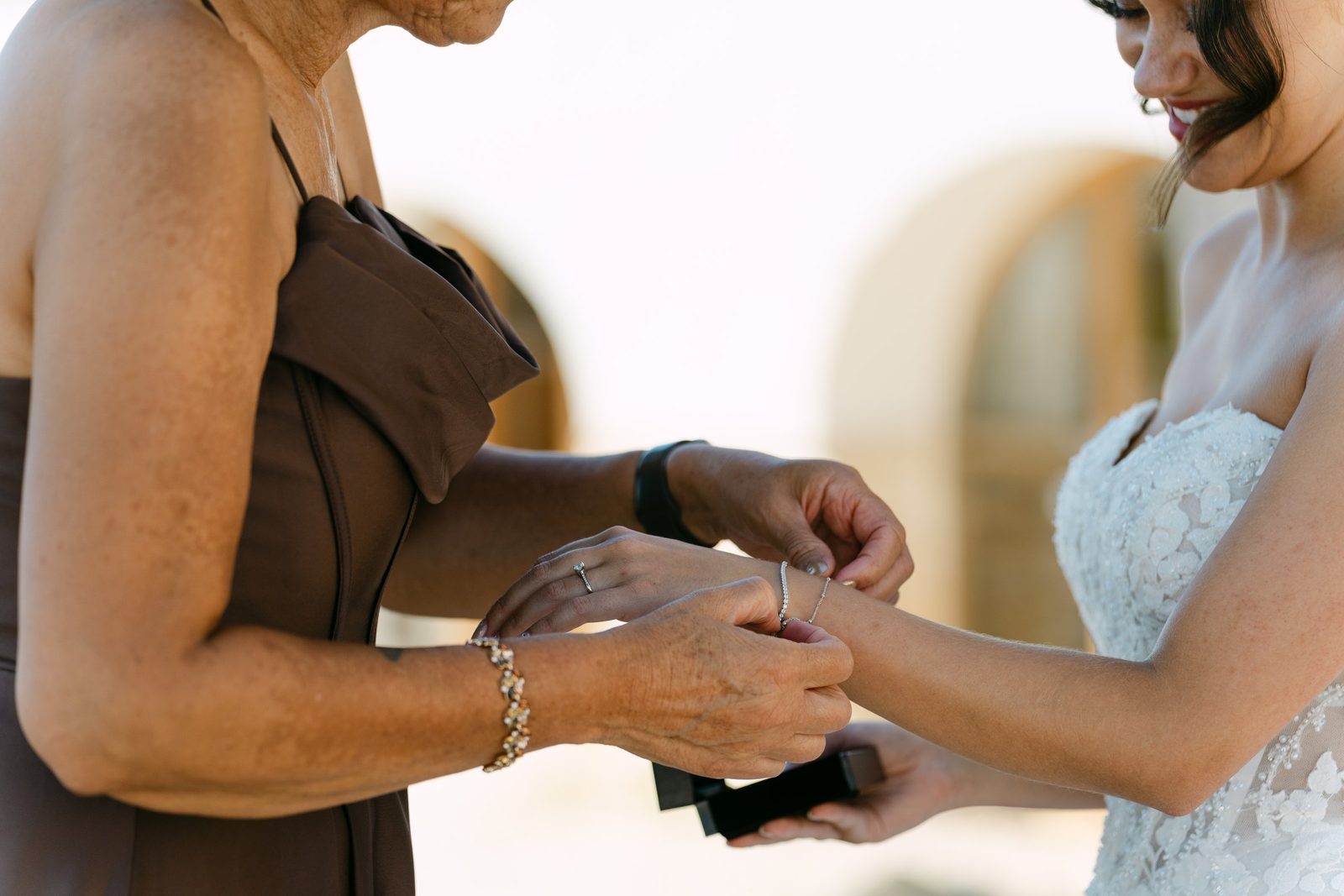
“I hate having my photo taken.” We hear it before almost every wedding, and several couples who said exactly that now say the opposite in our love notes. Looking natural is not a talent and it has very little to do with your face. It depends on what you are thinking about while the camera is out, and that is something you can change.
Why people look stiff
A stiff photograph is almost always a photograph of someone checking themselves: the chin, the smile, the arm, the double chin they worry about. A pose asks you to perform, so you watch your own performance. That is why the classic instructions, “tilt your head, now smile, now look at me”, produce the faces nobody likes.
We work the other way round. Instead of poses we give you something to do or something to say, and photograph what happens. You stop thinking about the camera because you are thinking about each other.
1. Meet us before the wedding
A video call months before changes more than any tip in this article. On the day you are not posing for two strangers with cameras; you are spending twenty minutes with two people you already know, who already know which of you laughs first and which one needs a minute.
2. Give your hands a job
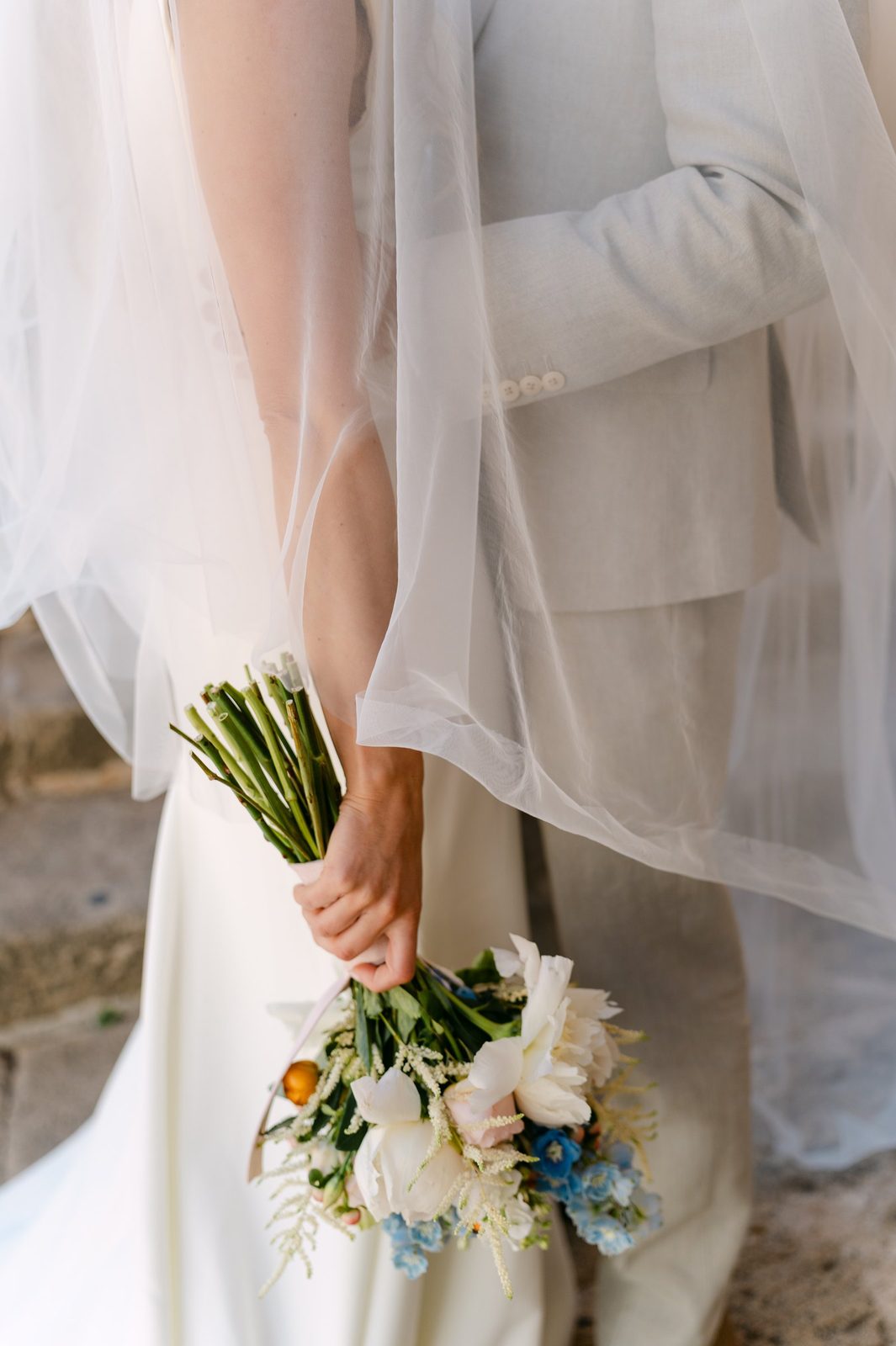
Hands are where nerves show first. Hold the lapel of his jacket, the bouquet low and loose, a glass, each other’s fingers, the edge of the veil. A hand that is doing something looks relaxed; a hand that is waiting for instructions looks like it is waiting.
3. Look at each other, not at us
The stiffest photographs are the ones where someone looks straight into the lens and holds it. Talk, whisper something silly, tell each other what you thought when you first saw the dress or the suit. Walk somewhere, slowly, without a destination. We will move around you and find the light.
4. See each other before, alone
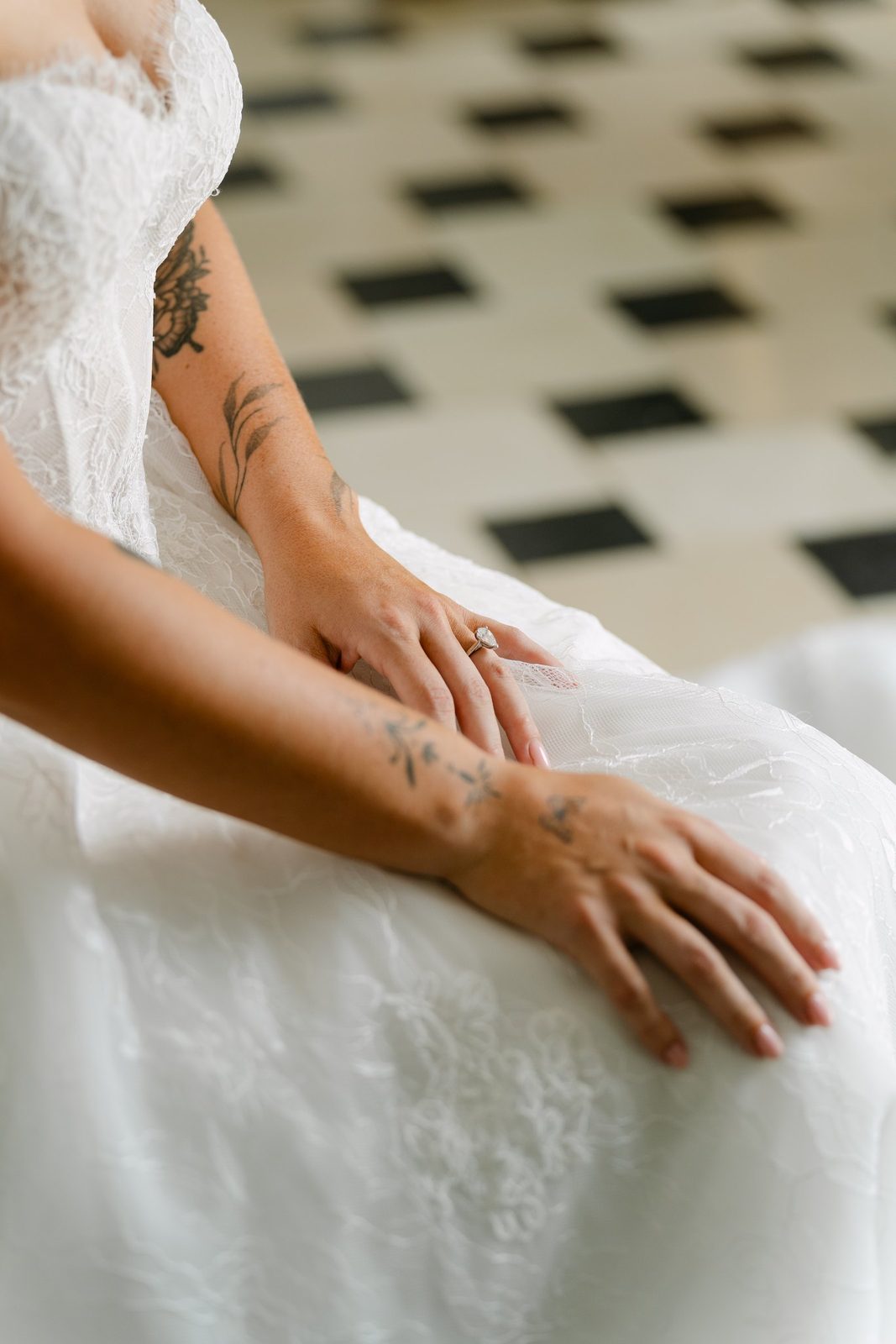
If you like the idea, see each other for the first time before the ceremony, alone, with us far away and a long lens. It is the most honest five minutes of the day. The nerves go, the hands stop shaking, and every photograph after it is softer. It also frees time later, which brings us to the next point.
5. Never rush the portraits
Nothing kills a natural smile like a clock. If the planner is waving from the door because dinner is waiting, everyone can see it in your face. Twenty protected minutes in the golden hour, without anyone watching, is worth more than an hour squeezed between two other things.
“We’re shy and had never posed in our lives.” Aixa & Omar
6. Shoes, glasses and the details nobody mentions
Bring a second pair of shoes you can walk in on grass, gravel and old stone stairs; the portraits are a walk, and you cannot look free in shoes that hurt. Practise the bustle of the dress with whoever will help you on the day. If you always wear glasses, keep them on: people should recognise you. Ask your optician for an antireflective coating and we will take care of the angle.
7. Makeup for the camera, not for the mirror
At night we sometimes use flash, especially on the dance floor. Foundations with a high sun protection factor and loose powders that contain silica or titanium dioxide can bounce that light back and leave a white cast on the face that cannot be fully corrected afterwards. Tell your makeup artist the wedding will be photographed with flash; good ones know exactly what to change. Waterproof mascara, always.
8. Keep your people close, and the rest far
Nobody laughs on command, but everyone laughs at their best friend. Ask the two or three people who make you relax to stay near during the portraits, just out of frame. Ask everyone else to stay at the cocktail: forty guests with phones watching you kiss is a performance, and it shows.
9. Let the day happen
The best photographs of a wedding are rarely the planned ones. A dress caught by the wind, a father who cannot finish his speech, a dance floor at its loudest. Our job is to be in the right place without you noticing. Yours is to forget we are there.
Questions we are asked
How many posed photographs will there be?
Very few. The family photographs from a short list, and twenty minutes for the two of you in which we give you prompts rather than poses. Everything else is documentary.
Should we do a first look?
Only if you like the idea. It calms the nerves and frees time after the ceremony, but some couples want the first sight to happen at the altar, and that moment is just as beautiful to photograph and to film.
What should we do if we feel awkward?
Say it. It happens to almost everyone in the first two minutes, and it passes the moment you start talking to each other instead of thinking about the camera.
Read what couples who hated the camera say: Love notes.